Manning
The Mysterious Affair at StylesManning, the gardener at Styles Court, is a modest but important witness in the inquiry into Emily Inglethorp’s death: while tending the grounds, he was present when Emily summoned him and another gardener to sign a paper that became central to the mystery of her will. His testimony supplies a concrete witness to the document’s signing, though not to what it contained.
Identity and Work
Manning is one of the three gardeners then employed at Styles Court. Dorcas contrasts the reduced staff with the five gardeners who had worked there before the war, naming Manning, the younger William, and a woman gardener among the current workers. The passing reference places Manning within the estate’s household and its altered wartime circumstances, rather than among the family’s principal actors.
The Garden and the Paper
The inquiry brings Manning in from his work outside. The sound of hobnailed boots on the gravel announces his approach, and he enters through the French window, holding and carefully twisting his cap. The account presents him as bent-backed and cautious in speech, but with sharp, intelligent eyes. He appears hesitant in the drawing room, and his first look at Hercule Poirot carries faint contempt; these details set his guarded manner against Poirot’s brisk questioning.
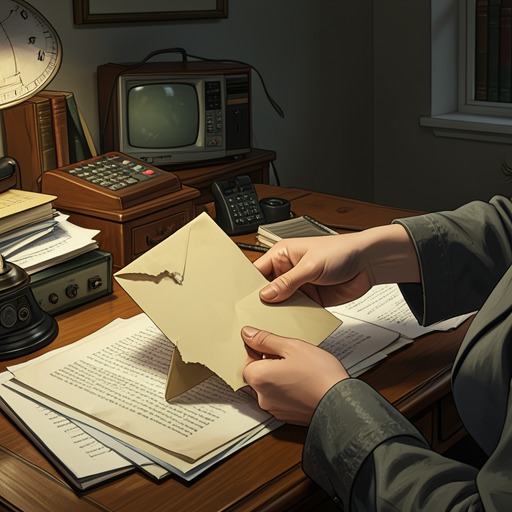
Poirot asks about the previous afternoon, when Manning and William were planting begonias on the south side of the house. Manning confirms that Emily came to the window and called them both inside. She then had them sign their names at the bottom of a long paper, beneath her own signature. When Poirot asks what was written above it, Manning says that blotting paper covered that part. His evidence establishes the signing and the concealment of the text, but cannot identify the document’s contents from his own observation.
The Will and the Case
The legal and financial context explains why this limited observation matters. Emily’s will from the previous August left her fortune to her elder stepson, John Cavendish, with the stated understanding that he would need to maintain Styles; Lawrence Cavendish was separately due a considerable sum under his father’s will. Hercule Poirot points out that Emily’s remarriage automatically revoked the earlier will, a rule acknowledged in the discussion of the document’s legal status. Thus, the existence of a signed paper does not by itself settle who would inherit.
At John’s trial, the prosecution describes Emily as having made a new will for her husband after her quarrel with John on July 17, and says that the document was found destroyed in her bedroom grate the next morning. The defense argues that John, who had formerly practiced at the Bar, knew the earlier will in his stepmother’s husband’s favour had already been revoked by her remarriage. It also promises evidence about who destroyed the new will, suggesting that this question could alter the case’s interpretation. Manning’s account supports the fact of a signing; it does not resolve the paper’s contents or the later destruction.
Narrative Role
Manning’s testimony is significant precisely because it is concrete and bounded. He can attest to the gardeners’ summons, the signatures, Emily’s position at the top of the paper, and the blotting paper covering its text. He cannot say what was written. In a plot where wills and inheritance generate competing explanations, that distinction keeps a witnessed act from being mistaken for a complete explanation: Manning helps establish what happened, while leaving its legal and criminal meaning open.